
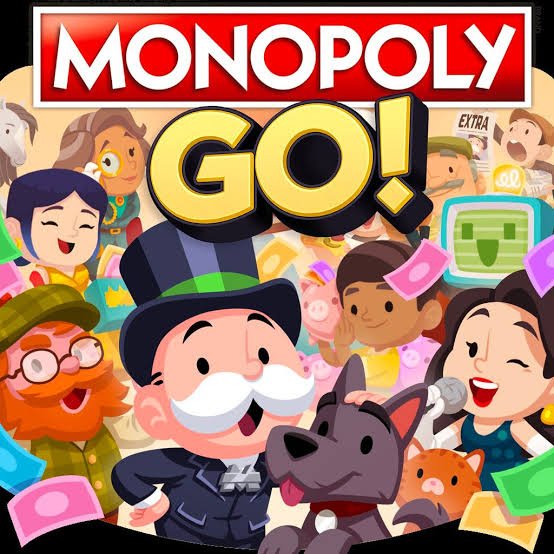
No cellular sport in historical past has made cash quicker than Monopoly GO!. In response to Sensor Tower’s Retailer Intelligence estimates, Scopely’s reimagining of the century-old board sport crossed $6 billion in lifetime in-app buy income by the top of 2025 — reaching that determine in simply 1,275 days, beating the earlier file holder, Mixi’s Monster Strike, by practically 400 days. Reporting since signifies Scopely expects the sport to achieve $8 billion in lifetime income by summer time 2026, which might imply it out-earned even Scopely’s personal Pokémon GO at a quicker tempo. For an trade that spent many of the 2020s worrying that the free-to-play formulation was operating out of highway, Monopoly GO! is the clearest proof but that it is not — it has merely modified form.
What Monopoly GO! Truly Is
Strip away the licensed board-game pores and skin and Monopoly GO! is finest understood as a extremely refined “roll and accumulate” sport: gamers faucet cube to maneuver round a board, triggering mini-games, gathering digital foreign money, and — critically — buying and selling stickers with associates to finish themed units. It shares virtually nothing with a standard Monopoly board sport past aesthetics and the identify. This distinction issues, as a result of it explains why the sport succeeded the place dozens of different licensed cellular board-game variations failed: Scopely did not digitize Monopoly, it constructed a confirmed cellular monetization loop and wrapped Hasbro’s IP round it.
The core design lineage traces again to Scopely’s earlier “Board Kings”-style mechanics, refined additional by the studio’s acquisition of Israeli developer Genie Video games, whose staff had expertise constructing precisely this type of social, event-driven informal loop. The consequence launched globally on April 11, 2023, and instantly outperformed virtually each inside projection Scopely had made.

The Numbers That Clarify the Progress
Sensor Tower’s knowledge presents an unusually detailed image of simply how deep participant engagement runs. As of the latest reporting, gamers have collectively handed “Go” practically 200 billion instances, accomplished greater than 7 billion sport boards, and made practically 30 billion digital journeys to jail. Maybe a very powerful quantity for understanding the enterprise, although, is retention: Scopely has acknowledged that roughly 70% of gamers return to the sport each single day — an awfully excessive determine for any cellular sport, not to mention one practically three years previous launch. For comparability, most profitable informal cellular video games take into account day-30 retention within the 5-10% vary a powerful consequence; a 70% every day return fee suggests Monopoly GO! has successfully turn out to be a recurring, near-daily ritual for its core base somewhat than a sport folks sometimes open.
Sensor Tower’s monitoring additionally locations Monopoly GO! among the many prime 10 highest-grossing apps of any class by in-app buy income — forward of established subscription giants like Disney+, Tinder, and HBO Max. That comparability is value sitting with: a cellular sport constructed round a 90-year-old board sport IP is now producing extra shopper spending than a few of the world’s largest streaming and courting platforms.
The Engine Behind the Retention: Occasions, Not Updates
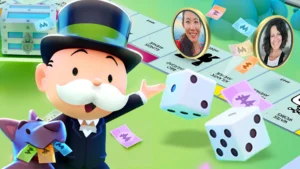
Conventional live-service cellular video games retain gamers by means of content material updates — new ranges, new characters, new areas to discover. Monopoly GO! runs on a basically completely different cadence: a near-constant rotation of time-limited occasions (Sensor Tower and third-party trackers have documented occasion combos with names like Pinata Get together, Workforce Battle, Sky Race, and Propeller Insanity biking by means of the sport on a near-weekly foundation), every triggering distinct spending conduct. This event-driven design, somewhat than any single content material drop, is what a number of trade analyses level to as the actual engine of the sport’s income — sticker buying and selling specifically creates a social stress loop the place finishing a set requires both endurance, luck, or a direct buy, and the presence of associates’ progress creates a comparability dynamic that pure solo puzzle video games haven’t got.
It is value being clear-eyed about what this implies in observe: the sport’s economics rely upon a monetization construction that leans closely on FOMO — concern of lacking out — mechanics, time stress, and social comparability. That is not distinctive to Monopoly GO!, however the sport executes it with uncommon precision, and the income outcomes replicate simply how efficient that execution has been.
What This Means for Scopely and the Wider Business
Monopoly GO!’s success has been transformative for Scopely particularly. The studio, beforehand identified for a broad however much less spectacular portfolio, successfully grew to become one of many trade’s top-tier publishers in a single day due to a single title — a focus of fortune harking back to what Supercell skilled with Conflict of Clans or Dream Video games with Royal Match. Scopely’s mum or dad firm, Savvy Video games Group (backed by Saudi Arabia’s Public Funding Fund), has leaned into this momentum, with reporting suggesting the studio’s success helped place it for additional acquisitions within the cellular house.
For the broader trade, Monopoly GO!’s trajectory presents a selected and considerably uncomfortable lesson: the fastest-growing cellular sport in historical past was not a technical or inventive innovation within the conventional sense. It was a licensing deal paired with the disciplined execution of an already-proven informal monetization loop, focused at an unlimited built-in viewers (Hasbro experiences greater than 275 million bodily Monopoly copies bought since 1935, and over 1 billion cumulative gamers throughout bodily and digital codecs) that had by no means been correctly served by a cellular adaptation earlier than. That mixture — recognizable IP, confirmed mechanics, aggressive occasion cadence — is now the template a wave of subsequent licensed cellular video games have tried, with blended outcomes, to copy.
How It Compares to Earlier Document Holders
Context issues when evaluating a “quickest ever” declare, and the listing of video games Monopoly GO! overtook is instructive. Sensor Tower’s knowledge reveals the sport beat Mixi’s Monster Strike (1,673 days to $6 billion) and Tencent’s Honor of Kings (1,762 days) to the identical milestone. Different titles that ultimately crossed $6 billion — Dream Video games’ Royal Match (1,868 days), miHoYo’s Genshin Affect (1,873 days), and Supercell’s Conflict of Clans (2,206 days) — took roughly one-and-a-half to 2 instances as lengthy. What’s notable is that each different sport on that listing constructed its success on both a decade-plus of sustained operation (Conflict of Clans), a globally beloved unique IP constructed particularly for gacha mechanics (Genshin Affect), or genuinely progressive style execution (Royal Match). Monopoly GO! reached the identical monetary milestone utilizing a licensed board sport model and a monetization loop that, by Scopely’s personal design lineage, existed in much less polished kind properly earlier than Monopoly GO! itself launched. The pace of the achievement says much less about novelty and extra about how effectively a known-good cellular sport formulation could be executed when paired with ample user-acquisition finances and a globally acknowledged model.
The Monetization Construction in Follow
Sensor Tower’s income figures explicitly exclude promoting income, direct-to-consumer purchases, and gross sales by means of various app marketplaces — which means the reported $6 billion determine is a flooring, not a ceiling, on Monopoly GO!’s precise earnings. The core in-app buy construction follows a well-recognized casual-game sample: gamers purchase in-game foreign money (“Cube Rolls”) that operate as the first useful resource gating development across the board, alongside direct purchases tied to time-limited occasions. What distinguishes Monopoly GO! from a typical currency-sink mannequin is the social sticker-trading system layered on prime — as a result of finishing a themed sticker album requires particular stickers that may solely be obtained by means of gameplay, buying and selling with associates, or direct buy, the sport creates a completion-driven buy set off that operates independently of uncooked gameplay development. Gamers who’re in any other case glad to play totally free can nonetheless really feel stress to spend after they’re one particular sticker away from a limited-time reward, a psychological mechanic borrowed from bodily sticker-album gathering tradition that lengthy predates cellular gaming.
The Sustainability Query
No hyper-casual or event-driven cellular sport has sustained peak income indefinitely, and Monopoly GO!’s personal trajectory reveals early indicators of the sample: whereas lifetime income retains climbing, month-over-month figures have proven extra volatility as the sport matures previous its preliminary launch curve, producing an estimated $200 million monthly in more moderen reporting — nonetheless huge, however a deceleration from the sport’s earliest, fastest-growth months. Whether or not Scopely can maintain the occasion cadence contemporary sufficient to maintain 70% every day retention over a five- or ten-year horizon, the best way Supercell has carried out with Conflict of Clans for over a decade, stays genuinely unresolved. The board-game style broadly is projected to carry roughly 36% of the worldwide tabletop market by income share in 2026 in line with Coherent Market Insights, with Monopoly as the one largest driver of that determine — which means Scopely and Hasbro have actual incentive, and actual capital, to maintain investing within the sport’s longevity somewhat than letting it decay the best way many cellular hits ultimately do.
The Verdict
Monopoly GO! isn’t a inventive triumph in the best way a critically acclaimed console sport could be, and it is not attempting to be — it is a masterclass in utilized cellular sport economics, constructed by a staff that understood precisely which levers drive every day engagement and monetization in a free-to-play context, then connected that engine to probably the most recognizable manufacturers on the planet. The 70% every day retention determine alone needs to be studied by each cellular studio chasing related development, as a result of it represents one thing genuinely uncommon: a sport that has made checking in really feel much less like leisure and extra like behavior. For gamers, that is value entering into with eyes open about — the mechanics that make the sport so retentive are the identical ones that make it straightforward to overspend chasing a sticker set. For the trade, Monopoly GO! has already rewritten what “success” appears to be like like for a licensed cellular sport, and its subsequent actual check — proving it might maintain this tempo for a decade somewhat than a launch window — is simply simply starting.